















Dr. Rahul Maity 
५/८/२०२६, ६:५२:३८ पू (5/8/2026, 6:52:38 AM)
These are the hidden gems of India—read, enjoy, and share the wisdom of ancient Indian thought.
अभ्यासाद्धार्यते विद्या: In IKS, reading a book does not equal Vidyā (internalized knowledge). Knowledge is highly volatile and escapes the mind without Abhyāsa (repetitive, dedicated practice). This directly mirrors Maharṣi Patañjali’s Yoga Sūtra (1.14): "स तु दीर्घकालनैरन्तर्यसत्कारासेवितो दृढभूमिः" (Practice becomes firmly grounded when attended to for a long time, without interruption, and with devotion).
कुलं शीलेन धार्यते: A family (Kula) is not sustained by inherited wealth (Dhana), genetics, or a famous surname. The actual "glue" that holds a lineage together and earns it societal respect is Śīla (ethical conduct and character). If the character of the descendants falls, the entire legacy of the lineage collapses.
गुणेन ज्ञायते त्वार्यः: The term Ārya (आर्य) in ancient India was never a racial or ethnic marker; it was a behavioral title meaning "noble" or "respectable." Chanakya scientifically defines that a person is proven to be an Ārya strictly through their Guṇa (virtues and actions), not by their birth.
कोपो नेत्रेण गम्यते: This connects to Āṅgika Abhinaya (physical expression) in Bharatamuni's Nāṭyaśāstra and the mind-body connection in Āyurveda. A person might use sweet words to hide their anger (Kopa), but the internal Rajo-guṇa (agitation) involuntarily alters the blood flow and micro-expressions in the eyes. The eyes act as an unfiltered mirror of the mind.
#AncientWisdom #IndianKnowledgeSystem #Sanskritayanam #ChanakyaNiti
#CharacterBuilding #ParentingTips #Education #Sanskrit #Consistency
#Sanskrit #LifeLessons#IKS #Indianwisdom #collection
#संस्कृतायनम् #samskritayanam #saṃskṛtāyanam #সংস্কৃতায়নম্ #sloka365 #DrRahul #drrahul #DrRahulMaity
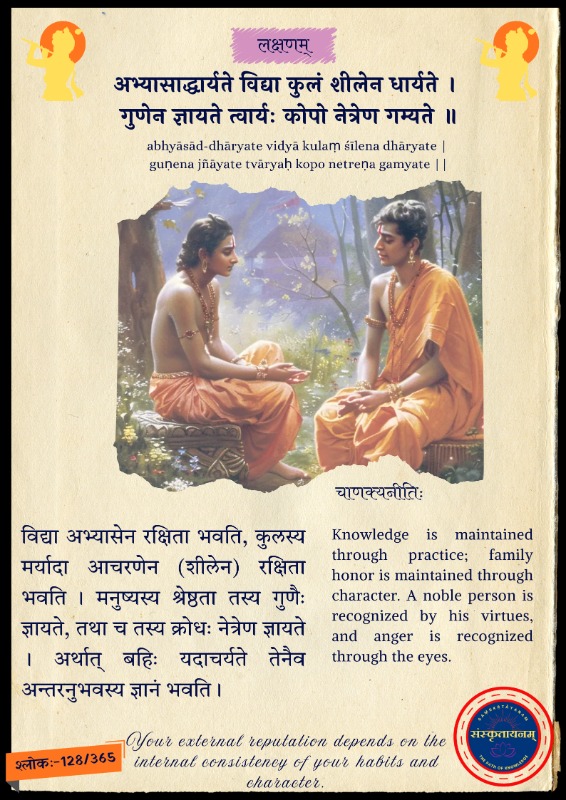
अभ्यासाद्धार्यते विद्या: In IKS, reading a book does not equal Vidyā (internalized knowledge). Knowledge is highly volatile and escapes the mind without Abhyāsa (repetitive, dedicated practice). This directly mirrors Maharṣi Patañjali’s Yoga Sūtra (1.14): "स तु दीर्घकालनैरन्तर्यसत्कारासेवितो दृढभूमिः" (Practice becomes firmly grounded when attended to for a long time, without interruption, and with devotion).
कुलं शीलेन धार्यते: A family (Kula) is not sustained by inherited wealth (Dhana), genetics, or a famous surname. The actual "glue" that holds a lineage together and earns it societal respect is Śīla (ethical conduct and character). If the character of the descendants falls, the entire legacy of the lineage collapses.
गुणेन ज्ञायते त्वार्यः: The term Ārya (आर्य) in ancient India was never a racial or ethnic marker; it was a behavioral title meaning "noble" or "respectable." Chanakya scientifically defines that a person is proven to be an Ārya strictly through their Guṇa (virtues and actions), not by their birth.
कोपो नेत्रेण गम्यते: This connects to Āṅgika Abhinaya (physical expression) in Bharatamuni's Nāṭyaśāstra and the mind-body connection in Āyurveda. A person might use sweet words to hide their anger (Kopa), but the internal Rajo-guṇa (agitation) involuntarily alters the blood flow and micro-expressions in the eyes. The eyes act as an unfiltered mirror of the mind.
#AncientWisdom #IndianKnowledgeSystem #Sanskritayanam #ChanakyaNiti
#CharacterBuilding #ParentingTips #Education #Sanskrit #Consistency
#Sanskrit #LifeLessons#IKS #Indianwisdom #collection
#संस्कृतायनम् #samskritayanam #saṃskṛtāyanam #সংস্কৃতায়নম্ #sloka365 #DrRahul #drrahul #DrRahulMaity
 ४४
४४ 
 १६.४ सह.
 2 comments

Prema Shree
५/८/२०२६, १०:५१:४२ पू (5/8/2026, 10:51:42 AM)
विद्या अभ्यासेन एव दृढा भवति।


आकाश कुमार | Akash Kumar
५/८/२०२६, १०:२०:२८ अ (5/8/2026, 10:20:28 PM)
एतत् ज्ञानं बहु सुन्दरम्।
